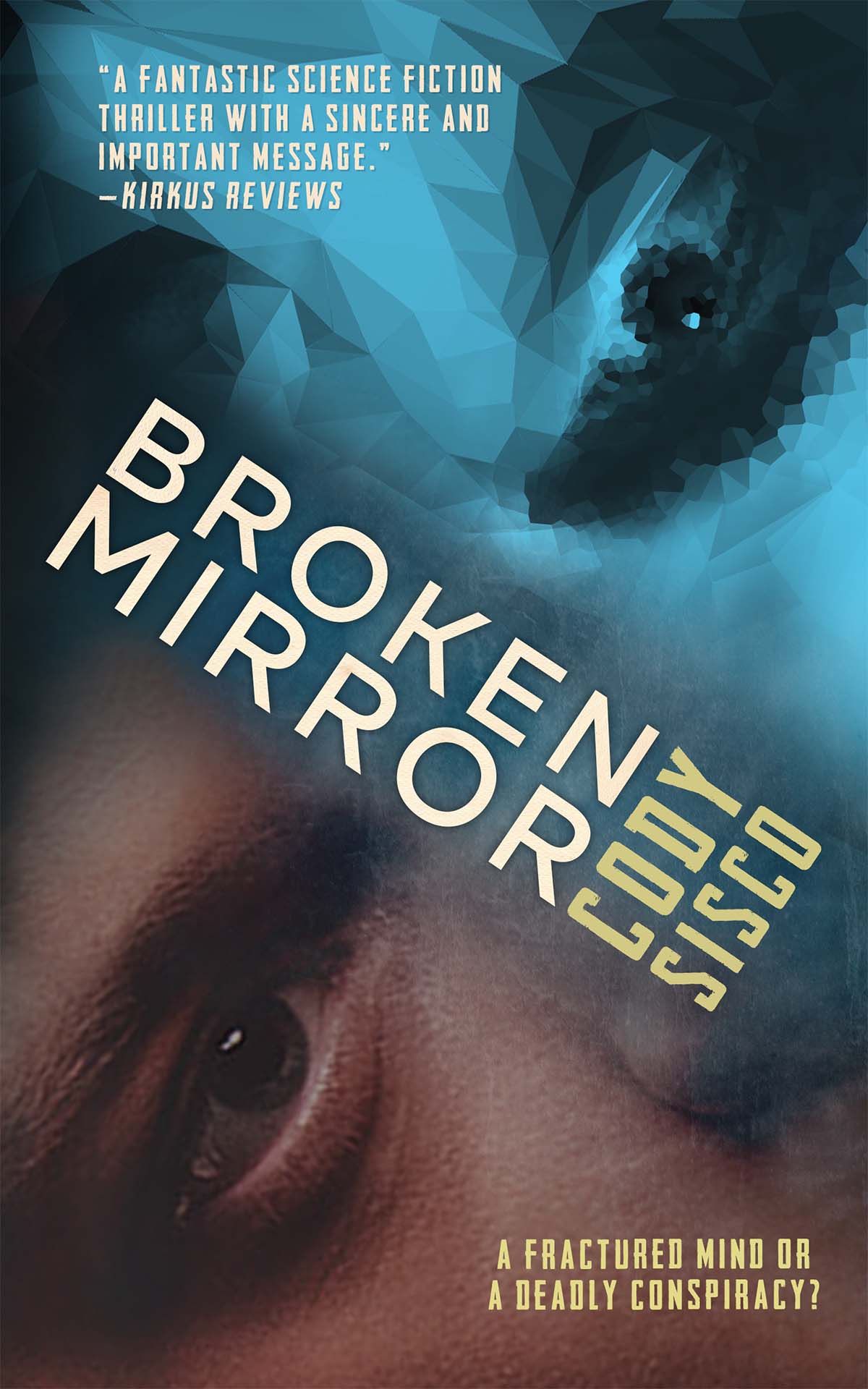
I became obsessed with the uncanny valley while writing Broken Mirror and imagining a new mental disorder called mirror resonance syndrome.
Researchers in the mid 2010s were exploring robotics and digital replicas of human beings. Video games also became extremely lifelike and photorealistic.
But there was a problem: the uncanny valley. People are extremely good at detecting when something feels off. If a replica is close enough to reality, we feel at ease. Or if the replica is far from perfect or stylized (think cartoon people or obviously fake animation), we know it’s intended to represent, not replicate, the real thing. Somewhere in between lies the uncanny valley, and it makes us extremely uncomfortable.
This concept helped shape one of Broken Mirror’s core ideas: the mental disorder that afflicts the main character.
I wasn’t aiming for representation of real-world mental afflictions, and I didn’t want to make something up that was totally fiction. I wanted to create an amalgam that would feel both familiar and off-putting, that readers could identify with while holding it up for inspection, and that kept characters and readers guessing about its true nature.
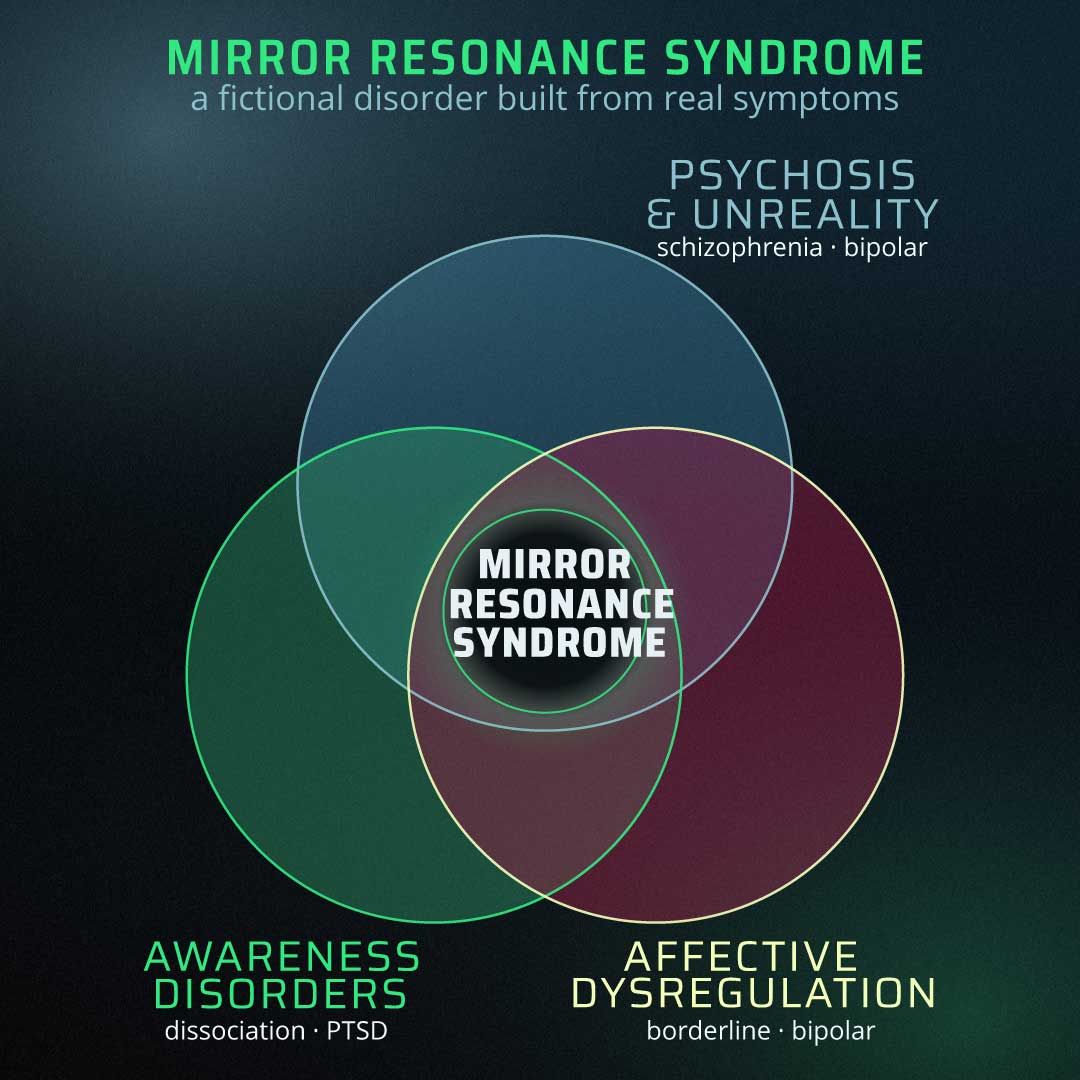
Mirror resonance syndrome (MRS) shares symptoms with a range of disorders, including schizophrenia, dissociative identity disorder, post-traumatic stress disorder, borderline personality disorder, and bipolar disorder, to name a few. There are other fictional symptoms in the mix as well, including synesthesia, blank outs (a kind of ambulatory sleepwalking), and suspiciously prescient dreams.
The discrimination and stigma that characters with MRS experience should also be familiar to readers. Our medical system and the culture at large fail to sufficiently care for many people with both transient and chronic experiences with mental illness, and while medication can be life-saving for many people, it can also take focus away from durable and effective alternatives as well as the larger economic and social forces that can lead to and exacerbate mental illness.
All that to say, mirror resonance syndrome is not real, but if you feel you are experiencing symptoms, please consult a real mental health professional. When you’re feeling well enough, that’s the time to dive into the world of Broken Mirror.
Read Book 1