Think you might have mirror resonance syndrome?
You’re not alone.
The SeCa Health Board reminds you that Mirror Resonance Syndrome is a serious condition and checkups are mandatory.
What is Mirror Resonance Syndrome?
Mirror Resonance Syndrome (MRS) is a degenerative brain disorder associated with electrochemical imbalances within mirror-neuron networks — the structures that enable individuals to understand and interpret the intentions and emotions of others.
Symptoms can be severe, vary widely from patient to patient, and usually include habitual aggression and violence. Many people with MRS experience extreme emotional transference, which — paradoxically — can lead to blank outs: dreamlike fugue states during which the patient is unaware of their actions.
At a glance
- Category: Neurological & cognitive disorder
- Onset: Typically adolescence to early adulthood
- Progression: Degenerative, often accelerating
- Treatment: Resonant-class modulators (see Diagnosis & Treatment)
- Reporting: Diagnosis is reported to the Classification Commission per SeCa statute §14.7
Symptoms & Diagnostic Criteria
Per the Diagnostic Criteria for Mental Disorders, Semiautonomous California Health Board, Third (Revised) Edition. A clinical diagnosis requires emotional hyper-reactivity over an extended period, plus three or more of the progressively worsening criteria below.
Hyper-reactivity to stimuli
Abnormally strong physiological and emotional reactions to physical or mental stimuli, including synesthesia and hallucinations.
Subjective loss of autonomy
The experience of being controlled, following a predetermined course, or reliving events — including episodes of déjà vu lasting hours or days.
Immersive fantasies
Persistent, immersive fantasies to the exclusion of reality.
Depersonalization
Loss of emotional vividness, motor-body disorientation, dissociative states, or extreme variability in self-image.
“Brain blankness”
Dreamlike fugue states and sleepwalking, often with no recollection of the episode.
Resonant-class addiction
Addiction to resonant-class narcotics. (New criterion, 3rd Revised Edition.)
Self-Check
Have you experienced any of the following in the past six months? Check all that apply. Your responses are not stored or transmitted.
Mirror Resonance Self-Assessment
Causes
Mirror Resonance Syndrome originates in the mirror-neuron network — the neural circuitry through which humans understand and interpret the intentions and emotions of others. In MRS patients, electrochemical imbalances disrupt this circuitry, producing hyper-resonance: a flooding of borrowed emotion that overwhelms the patient’s own affective state.
The condition has been linked to a recessive genetic variation present in less than 1% of the population. Environmental triggers — including prolonged exposure to resonant-class narcotics — are believed to accelerate onset in genetically predisposed individuals.
Diagnosis & Treatment
Diagnosis is determined by a licensed Classification physician following a standardized cognitive resonance assessment. Results are reported to the Classification Commission within 72 hours per SeCa statute §14.7.
Treatment protocols typically involve resonant-class modulators administered under supervised clinical conditions. Untreated MRS progresses to advanced stages within five to twelve years of symptom onset. Patients exhibiting Category III symptoms may be reassigned to a designated care ranch for the safety of themselves and the community.
When to seek a checkup
- If you have a first-degree relative with diagnosed MRS
- If you have experienced three or more diagnostic criteria for at least six months
- If your loved ones have expressed concern about your behavior
- If you have been involved in an incident of unexplained violence or memory loss
Get Checked. It’s the Law.
Annual cognitive resonance assessments are mandatory for all SeCa residents aged 12 and over.
This is a work of fiction.
Mirror Resonance Syndrome is not a real medical condition. It is the central concept in Broken Mirror — the first volume of the Resonant Earth saga by author Cody Sisco. The “Semiautonomous California Health Board” and its mandatory checkups belong to the alternate-history world of the series.
If reading this page felt unsettling — that’s by design. The Resonant Earth series asks what happens when a society pathologizes the people it doesn’t understand, and what it costs the people forced to live under that gaze.
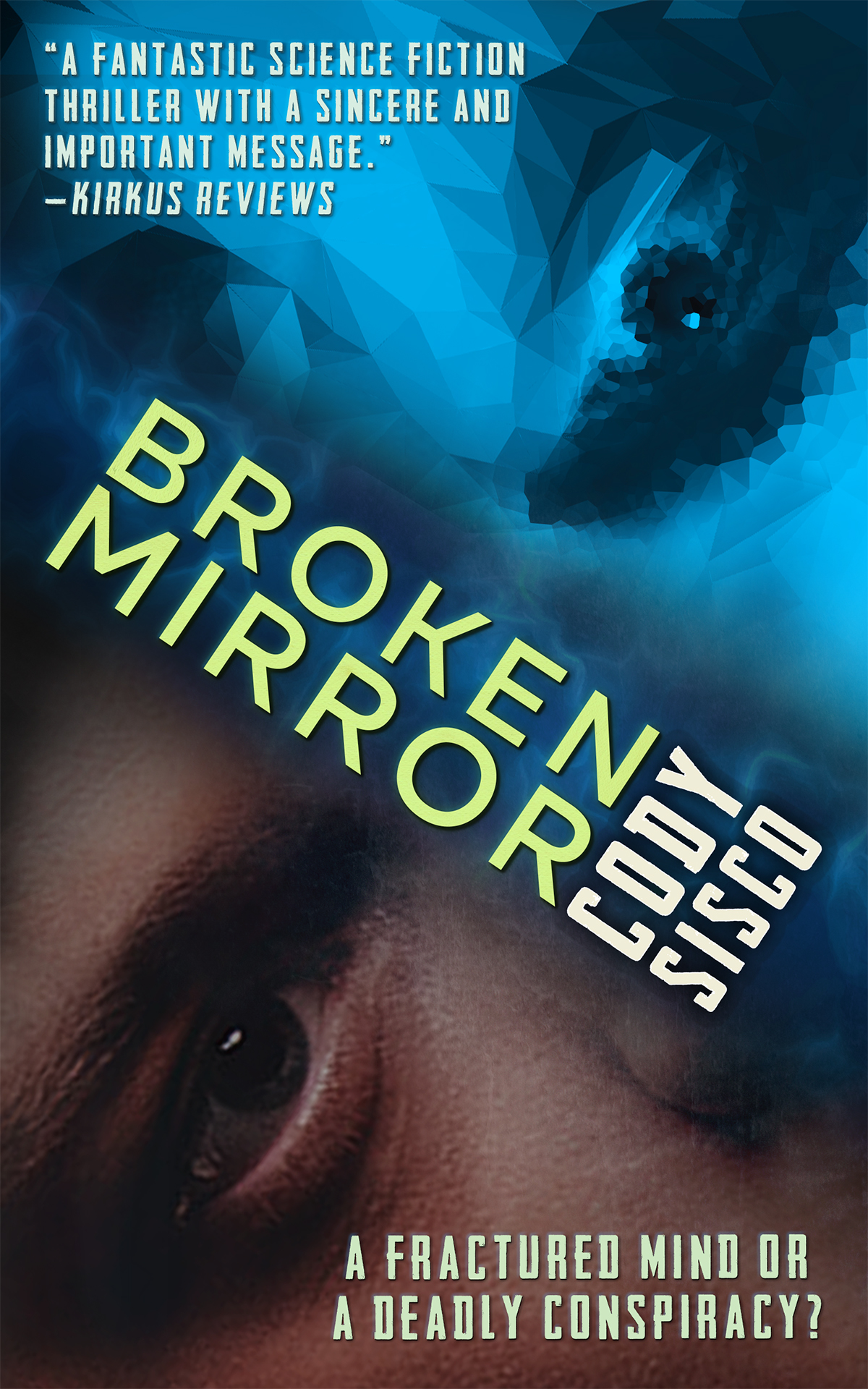
Broken Mirror — Volume 1
A fractured mind or a global conspiracy? Uncovering the truth can be hell when nobody believes you… and you can’t even trust yourself.
“A fantastic SF thriller with a sincere and important message.”
— Kirkus Reviews
“A breathtaking, deeply dark alternate-history Earth with complex characters, layered worldbuilding, and twist after twist after twist.”
— Julianna Caro, Reedsy Discovery